How Proterial Cable America increased non-branded clicks by 147%



How Proterial Cable America increased non-branded clicks by 147%

How AbeTech increased organic visibility by 485%

How Proterial Cable America increased non-branded clicks by 147%
We’re the LinkedIn ads agency that builds the layered campaign structure and named-account targeting that complex deals require, whether we’re rebuilding a stalled program or standing one up from scratch.





Some B2B businesses are spending on LinkedIn every month with nothing to put in front of leadership; others know their buyers are on the platform but haven’t risked a dollar yet. LinkedIn is one of the most powerful B2B paid advertising channels available, and one of the easiest to get wrong.
At Konstruct, our LinkedIn ad campaigns are structured around the reality of complex B2B purchasing. Our campaigns run every level of the funnel, educational content, lead capture, and brand, against your full target account list from launch, so a buyer who’s ready to act on day one has a conversion path immediately, while a buyer who needs six months of exposure builds familiarity throughout. As accounts show engagement signals, we expand targeting to reach the full buying committee around the person who engaged first, because internal champions still need to convince their CFO and project managers. That multi-stakeholder coverage is where LinkedIn ads actually earn their budget.

You don’t need another agency telling you how good it is at paid media. You need proof from people who’ve watched ad spend build a direct pipeline. So instead of listing our own credentials, we’ll leave it to the marketers and business owners who see our impact firsthand.

A LinkedIn program built for a B2B-level sales cycle looks nothing like one built for a quick click.
We develop a LinkedIn advertising strategy tailored to your target accounts, buying committee, and sales cycle length. That means defining who we’re reaching at every stage, what each stakeholder needs to see at each touchpoint, and how budget is allocated to produce qualified opportunities rather than lead volume that flatters the dashboard and frustrates your sales team.

A tired ad gets ignored, no matter how sharp the targeting.
We write and design for the stage the audience is in: non-promotional content that earns a cold buyer’s attention, proof and case studies that speak to a retargeted prospect’s pain points, and direct, conversion-first copy that asks high-intent accounts to act. Every piece is built to be worth a decision-maker’s time in a professional feed, not to chase the engagement numbers that look good in a report and move no deals.

LinkedIn campaigns are living things, not something you launch and leave.
Performance decays as your audience sees the same ads, so we rotate creative before the numbers fall, test new layers and ad sets, and refresh audiences as your account list grows. We move budget continually toward the segments and stages producing qualified conversations and cut what the data no longer supports, so the program compounds across a long sales cycle instead of going cold.

Concentrate your spend on the accounts you actually want.
Instead of generating volume at the top of the funnel and hoping the right companies surface, an ABM approach allows you to define the high-value accounts you want to do business with and concentrate your resources on them. We build coordinated LinkedIn campaigns aimed squarely at that list, designed to get your brand on their radar, earn their trust, and move them toward a conversation with your sales team.
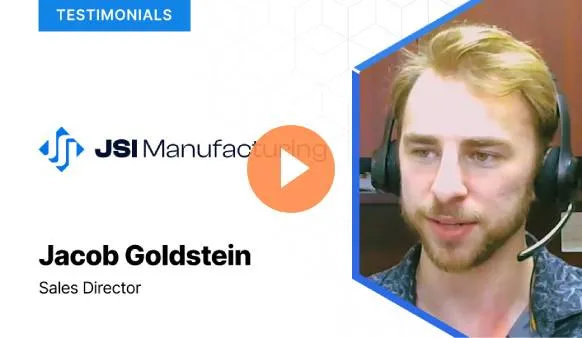
Learn about our ABM services“It’s funny because I don’t want to recommend them. After all, I want to keep them for myself.”


Leading manufacturer of semi-trailers and truck bodies for freight and logistics companies.

Industrial manufacturer of engineered components and systems for fluid handling.

Global provider of electric motors, power transmission components, and automation solutions.

Specialist in the design and manufacture of high-performance wire and cable products for the medical, automotive, and industrial sectors.
Technology company that develops innovative audio conferencing and visual collaboration solutions for hybrid work and learning environments.
Global manufacturer of highly engineered power transmission and fluid power solutions for diverse industrial and automotive applications.
Strategic consulting firm focused on helping organizations drive business results by transforming their corporate culture.

Premier electronics manufacturing services (EMS) provider offering end-to-end supply chain and assembly solutions.

Life sciences company that develops high-quality biological products and controls for the global diagnostics and vaccination markets.
Before we spend a dollar, we decide exactly which companies are worth reaching. We start from your ICP and a first-party account list, then refine it until it reflects the firms that represent real revenue, not the broad firmographic bucket LinkedIn would otherwise serve. That list becomes the spine of the program, and every layer of targeting is built from it rather than from the platform’s native guesses.
We pull your competitors’ active ads through LinkedIn’s Ad Library and study what’s already winning attention in your category. That tells us which messages are resonating, which angles are oversaturated, and where your brand has room to own a position. Your campaigns launch from market evidence rather than internal assumptions, so you’re not paying to test things that the competitive landscape can tell us for free.
We translate strategy into a campaign structure that cleanly separates each funnel stage, audience layer, and ad format. The cold layer runs lean because its job is to surface intent, not to convert, and the majority of spend sits in the retargeting and high-intent campaigns where committee members are already evaluating you.
We produce the full range of formats your program requires, including thought leadership, image, and video ads for engagement and document ads with lead-gen forms for gated conversions. Because buying committee expansion depends on engagement data that builds over time, we plan creative production waves rather than releasing everything at launch. The minimum viable set goes live first; additional creative layers follow as the program matures and signals accumulate.
Once live, ongoing optimization begins. We continuously monitor frequency, creative fatigue, bid efficiency, and audience health. We also track the actions that signal a real opportunity, then follow those contacts into the sales cycle to see which deals LinkedIn touched, including the ones it influenced without ever earning last-touch credit. Reporting ties back to your CRM so leadership can see the pipeline influenced and revenue attributed.
OUR MARKETING METHODOLOGY
In 2025, B2B buyers initiated first contact with their chosen vendors 85% of the time. What does this tell us? The traditional outbound sales approach for industrial and manufacturing brands is BROKEN.
We are at a turning point. Brands that evolve now will lead tomorrow’s growth. Those that don’t will either play catch-up or be left behind.
This is why we developed the Go-To-Revenue (GTR) framework. GTR isn’t just another marketing buzzword: it’s a comprehensive digital marketing operating system crafted from our 13 years of executing performance marketing as a leading digital marketing agency for industrial and manufacturing companies across North America.
The Reality: The lone decision-maker is a thing of the past. Marketing needs to be multithreaded to influence hidden buyers.
Enterprise B2B buying groups now include 5-11 stakeholders across multiple departments. Your marketing must address diverse perspectives, pain points, and priorities simultaneously.
The Playbook: Demand Generation
The Reality: Digital research dominates buyer journeys. Whether they like it or not.
With B2B buyers initiating first vendor contact 83% of the time, your prospects are researching you and your competitors online and constantly evaluating their options, regardless of historical relationships. A focused industrial digital marketing agency ensures you influence those decisions early.
The Playbook: Demand Capture
The Reality: If sales don’t value marketing, you are just doing arts and crafts.
With B2B buyers engaging in approximately 27 interactions before making a purchase decision, your marketing work cannot stop at lead generation. Sales and marketing must operate as a unified revenue team.
The Playbook: Sales Acceleration
The Reality: Your prospects aren’t looking for clever brands: they’re looking for safe ones.
As solutions become more complex, perceived risk increases. In a world where 70% of buyers agree that the risk of making a poor decision has increased as solutions become more complex, credibility is the most valuable marketing asset. While 87% of decision-makers say branding influences purchasing decisions, that brand must convey expertise, not just aesthetics.
The Playbook: Performance Branding
The Reality: Industrial and manufacturing B2B buyers are a tough crowd.
Marketing executed without a real understanding of your business can attract the wrong audience or weaken credibility. This is why working with an experienced industrial digital marketing agency matters.
The Playbook: Marketing Intelligence
The Reality: Executives care about impact, not impressions.
C-levels don’t want to hear about clicks and engagement. They want measurable business outcomes. That’s why companies with mature acquisition strategies see 36% revenue growth, compared to just 17% for those with low-maturity approaches. As a performance-driven B2B marketing agency that industrial brands depend on, we focus on revenue influence, not vanity metrics.
The Playbook: Data & MarTech
“We work in a very niche space (B2B) and they were able to understand and deliver great quality content right away.“

Poojitha ReddivariProduct Manager
We build LinkedIn ad campaigns for B2B companies running long sales cycles with multi-stakeholder buying committees. That means we walk into your account already understanding your buying dynamics, the technical language your ads need to speak, and the credibility cues that separate a serious vendor from a passing scroll.
If your current marketing isn’t accelerating pipeline or supporting sales, it’s not working.
Request a proposal, and we will break down where your revenue engine is leaking and exactly how we’d fix it.
Hear why our clients love our proposals
The sequential funnel model (run awareness for two months, then switch on lead gen) makes sense if you’re broadcasting to a broad audience and need time to build a retargeting campaign. It doesn’t make sense for ABM campaigns targeting a finite list of named accounts.
When your target audience is a few thousand companies, waiting for a retargeting pool to form before showing conversion-focused creative can mean you never show it at all. And more importantly, not every contact on your list is at the same stage. Buyers on the same target list are rarely at the same stage at the same time. A sequential funnel treats them as if they are, making your most ready prospects sit through weeks of awareness content before they can find a conversion path. Our approach runs all funnel stages from day one, so every buyer finds what they need based on where they actually are.
A capable in-house marketer can build a campaign, but a specialized B2B LinkedIn management agency brings pattern recognition across dozens of accounts: which ad formats actually perform for complex B2B versus which ones look good in platform benchmarks, where LinkedIn’s automated bidding quietly wastes money, and how to structure tracking so attribution survives a long sales cycle.
There’s also a capacity question. Doing LinkedIn properly means constant creative testing, continuous optimization, and CRM-connected reporting, which is rarely something an already-stretched marketing team can sustain alongside everything else. The honest test is whether your in-house resource has both the specialized reps and the bandwidth to treat the ad platform as a discipline rather than a side task.
This is the most common story we hear, and the cause is almost always the same: the program was optimized for lead volume rather than lead quality. A volume goal tells the platform to maximize how many people convert, not how many of the right people convert, so the leads can look fine on a dashboard while few of them come from companies your sales team could actually close.
The fix isn’t a better headline; it’s a different goal. We rebuild around target accounts, so spend only reaches companies that would actually buy. We also connect the account to your CRM so we can see which leads are progressing into real opportunities, giving us the data to continuously optimize toward qualified, cost-efficient leads.
That scenario is closer to LinkedIn’s strength than its weakness. Other channels built for impulse conversions struggle with long, multi-stakeholder deals; LinkedIn is one of the few places you can deliberately stay in front of an entire buying committee for months without your message looking out of place.
The key shift is expectation. You should not measure a year-long deal against a 30-day lead target. Instead, the early signals are account engagement, the right titles inside your target companies interacting with your content, and a rising share of inbound from named accounts, with revenue attribution becoming clear later as deals mature. We set those staged benchmarks up front so no one on your leadership team judges a marathon by the first mile.
You own everything. Your LinkedIn ad account stays yours, LinkedIn bills your spend directly to your own payment method, and you keep full visibility into exactly where every dollar goes. Our fee for managing the program is separate and sits in your retainer, so there’s never a markup hidden inside your media spend or a black box between you and the platform.
You get reporting that ties campaign activity to pipeline in your CRM rather than a dashboard full of vanity metrics, and if we ever part ways, the account, the data, and the audiences you’ve built stay with you. That transparency is the same standard we’d want as clients, and it’s the one that should define credible LinkedIn advertising for agencies and in-house teams alike.
They work far better together, and treating them as separate budgets is a common mistake. LinkedIn paid ads get you reach and control over who sees what and when; organic builds the credibility that makes the paid reach land. When a decision-maker clicks your ad and then checks your company page or your executives’ recent activity, what they find either confirms you know your space or quietly undermines the whole campaign.
A coordinated approach, where your paid amplifies the thought leadership your team is already publishing, consistently outperforms running either in isolation. If you’re weighing a LinkedIn ad agency for paid alongside a broader LinkedIn marketing service for organic, the strongest setup keeps both under one strategy so the two reinforce each other instead of running on separate tracks.
The opening stretch is about building a foundation that compounds, not rushing ad launches to look busy. Early on, we map your accounts and committee, audit and fix your tracking and CRM connection, and pull competitive and creative intelligence so launch is informed rather than improvised. From there, campaigns go live within a clean account structure, and we begin systematic creative testing, with the first weeks generating leading indicators like account engagement, profile visits from target companies, and inbound from relevant buyers.