How Proterial Cable America increased non-branded clicks by 147%



How Proterial Cable America increased non-branded clicks by 147%

How AbeTech increased organic visibility by 485%

How Proterial Cable America increased non-branded clicks by 147%
We’re the agency that treats your marketing budget like the serious investment it is. Work with us to trade vanity metrics for pipeline and profit.




If you value marketing fluff over closed won deals, we’re not the agency for you.
At Konstruct, we understand your world of complex products, risk-adverse multi-stakeholder buying groups, and substantial deals with long sales cycles.
We only work with B2B companies where marketing success is measured in pipeline dollars and deal velocity, not oohs and ahhhs.
We execute systematic Go-To-Revenue programs that respect your expertise, work with your sales reality, and generate the kind of measurable results that transform marketing from a cost center to a revenue driver.
No fluff. No BS. Just results that justify every dollar of your investment.

We could show you flashy creative and engagement metrics, but that’s not what
drives your business forward. You want results your sales team will thank you for and
outcomes your leadership team can bank on.
Why Konstruct? Take it from the marketers and business leaders who have seen the
results of our work firsthand.

OUR MARKETING METHODOLOGY
In 2025, B2B buyers initiated first contact with their chosen vendors 85% of the time. What does this mean? It means that the traditional outbound sales approach for B2B brands is BROKEN. We are at an inflection point, and the brands that adapt today will be the growth leaders tomorrow. Those that don’t will either play catch-up or be left behind.
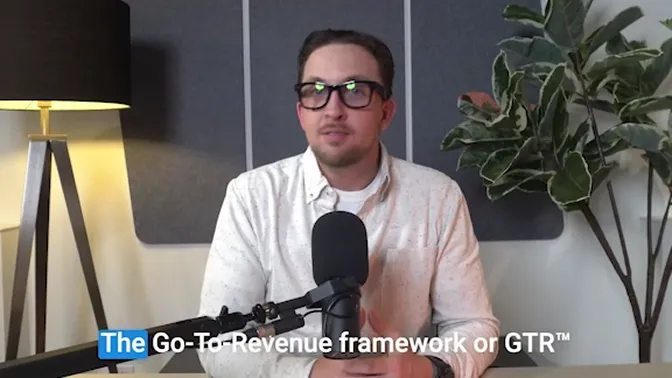
This is why we created the Go-To-Revenue (GTR) framework. GTR isn’t just another marketing buzzword – it’s a comprehensive digital marketing operating system crafted from our 13 years of executing performance marketing for B2B brands throughout North America.
The Reality: The lone decision-maker is extinct. Marketing needs to be multithreaded to impact hidden buyers.
Enterprise B2B buying groups now consist of 5-11 stakeholders representing upwards of 5 distinct business functions. Your marketing must address multiple perspectives, pain points, and priorities simultaneously.
The Playbook: Demand Generation
The Reality: Digital research dominates buyer journeys. Whether they like it or not.
With B2B buyers initiating first vendor contact 83% of the time, your customers are researching you and your competitors online and constantly evaluating their options, regardless of historical relationships.
The Playbook: Demand Capture
The Reality: If sales doesn’t value marketing, you are just doing arts and crafts.
When B2B buyers engage in approximately 27 interactions before making a purchase decision, your marketing work cannot stop at lead generation. Sales and marketing must function as a unified revenue team.
The Playbook: Sales Acceleration
The Reality: Your prospects aren’t looking for clever brands – they’re looking for low-risk brands.
In a world where 70% of buyers agree that the risk of making a poor decision has increased as solutions become more complex, your credibility is your most valuable marketing asset. While 87% of decision-makers say branding influences purchasing decisions, that brand must convey expertise, not just aesthetics.
The Playbook: Performance Branding
The Reality: Industrial and manufacturing B2B buyers are a tough crowd.
Marketing executed with only a superficial understanding can either attract the wrong audience or act as a counter-signal to potential buyers, strengthening pre-existing resistances, degrading credibility, and ultimately lowering your standing against competitors.
The Playbook: Marketing Intelligence
The Reality: Executives don’t care about impressions – they care about impact.
C-levels don’t want to hear about impressions, engagement rates, or brand awareness. They want to hear about business outcomes. That’s why companies with mature acquisition strategies see 36% revenue growth compared to just 17% for those with low maturity approaches.
The Playbook: Data & MarTech


Jonathan Reid Digital Marketing Content Specialist at AbeTech

Leading manufacturer of semi-trailers and truck bodies for freight and logistics companies.

Industrial manufacturer of engineered components and systems for fluid handling.

Global provider of electric motors, power transmission components, and automation solutions.

Specialist in the design and manufacture of high-performance wire and cable products for the medical, automotive, and industrial sectors.

Technology company that develops innovative audio conferencing and visual collaboration solutions for hybrid work and learning environments.

Global manufacturer of highly engineered power transmission and fluid power solutions for diverse industrial and automotive applications.

Strategic consulting firm focused on helping organizations drive business results by transforming their corporate culture.

Premier electronics manufacturing services (EMS) provider offering end-to-end supply chain and assembly solutions.

Life sciences company that develops high-quality biological products and controls for the global diagnostics and vaccination markets.
“We work in a very niche space (B2B) and they were able to understand and deliver great quality content right away.“

Poojitha Reddivari Product Manager









If your current marketing isn’t accelerating pipeline or supporting sales, it’s not
working.
Request a proposal, and we will break down where your revenue engine is leaking, and
exactly how we’d fix it.
Hear why our clients love our proposals