How Proterial Cable America increased non-branded clicks by 147%



How Proterial Cable America increased non-branded clicks by 147%

How AbeTech increased organic visibility by 485%

How Proterial Cable America increased non-branded clicks by 147%

Written by Amanda Thomas, Managing Partner October 29, 2024
This question frequently arises among our B2B clients, especially concerning siloed landing pages.
These pages offer users a distinct experience separate from the main website, with limited navigation options to return to the site. This approach stems from older best practices, often derived from B2C strategies.
But does it make sense in a B2B environment?
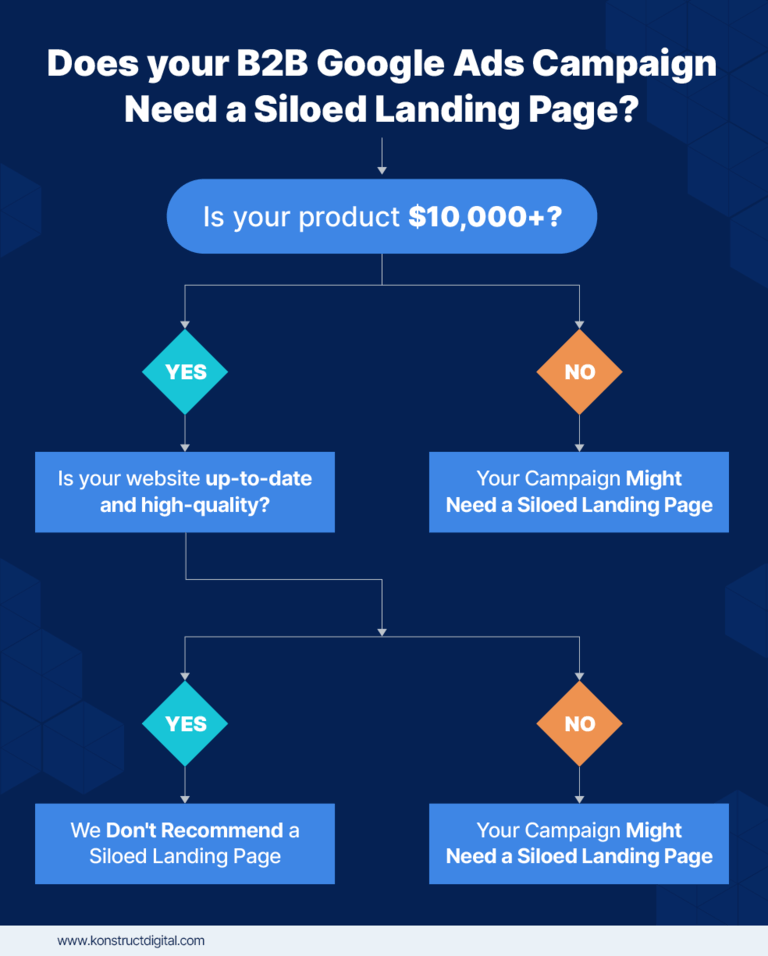
When selling a B2B product in the $10,000 to $1,000,000 price range, a siloed landing page may not suffice. Users need more information and engagement before committing to such significant purchases. Imagine trying to buy a house but only being allowed to view the foyer. Without the ability to explore further, users are unlikely to convert.
For high-price-point products, users should be able to navigate the website and learn more about the brand and offerings.
If your existing website is subpar, possibly due to bureaucratic obstacles in updating content or a lack of appropriate landing pages for your campaign, then using an offsite landing page might be justified.
However, it’s advisable to avoid creating a siloed experience. Users should still have the opportunity to explore and understand your brand before completing a conversion.
In conclusion, while dedicated landing pages can work in some cases, they are not always the best choice for B2B environments. Ensuring that users can navigate and familiarize themselves with your brand is key to higher conversion rates.If you need help with your B2B Google Ads strategy, contact us or get a proposal. We’ll help you determine and execute a successful strategy based on the tactics that make the most sense for your business.